We build education software development services for schools, universities, EdTech startups, and corporate training teams. From learning management systems to mobile learning apps, we build tools designed around how you actually teach, not generic platforms you have to work around.


We build learning platforms designed to hold attention and prove results — live video, interactive assessments, and personalized paths that adapt to each learner. For you, that means a product people actually finish, with the completion and engagement data to show investors or stakeholders it's working.
As an education app development company, we ship apps that work the way your users actually learn — on the bus, between meetings, on any device. You get one codebase that reaches both iOS and Android users without doubling your build time or budget.
Your teaching model doesn't have to bend to fit someone else's template. We build LMS platforms around your actual workflow, with SCORM/xAPI support baked in from day one. That means no costly rebuild later when you need to integrate with other tools or scale to new markets.
Before you commit to a real budget, we help you find out if the idea actually works. Wireframes first, then a clickable prototype, then a lean MVP you can put in front of real users. You validate demand and raise on traction, not just a pitch deck — and you avoid sinking months into the wrong build.
AI personalizes the learning path so each student gets the right content at the right pace. Blockchain makes certificates and academic records tamper-proof and instantly verifiable — no calls to a registrar, no fraud risk. For Web3-native founders, this is credibility built into the product, not bolted on after launch.
Our education software developers connect your platform to the tools you already run on — CRMs, payment gateways, internal databases, even crypto wallets and on-chain payment rails. Less manual work for your team, fewer dropped handoffs, and more time spent growing the business instead of babysitting systems that don't talk to each other.
Every learning challenge looks a little different, so we don't force you into a one-size-fits-all platform. Here's a closer look at the kinds of solutions our team designs and develops and the business problem each one is actually built to solve.
A virtual learning environment brings courses, materials, discussions, and grading into one connected space that students and instructors access from anywhere. Instead of juggling email threads, shared drives, and separate quiz tools, everyone works inside a single system built around how your courses actually run. For schools, universities, and training providers, this means fewer administrative bottlenecks, better visibility into student progress, and a consistent experience whether someone is learning from a classroom or a kitchen table. As one of the more foundational pieces of education app development, a well-built VLE becomes the backbone everything else plugs into.
A corporate training portal gives employees one place to complete onboarding, compliance, and skills training — and gives you one place to prove it happened. Rather than chasing spreadsheets to confirm who finished mandatory training, managers get real-time dashboards showing completion rates, certification status, and knowledge gaps across teams. For HR and L&D departments, this turns training from a recurring administrative headache into a measurable, auditable process. It also scales cleanly: onboarding 50 new hires costs the same operational effort as onboarding 5.
A purpose-built test and quiz system handles everything from question banks and timed assessments to automated grading and anti-cheating safeguards like randomized question order or browser lockdown. For educators, this removes hours of manual grading and gives instant, detailed feedback to students while they still remember what they studied. For businesses running certification programs, it means assessments that are consistent, defensible, and easy to scale across hundreds or thousands of test-takers without sacrificing accuracy or security.
Special education tools are built around accessibility from the ground up, including adaptive interfaces, text-to-speech, customizable pacing, sensory-friendly design, and IEP progress tracking that actually reflects each learner's individual plan. For schools and therapy providers, this means being able to serve a wider range of learners without needing a different system for every need. It also gives educators and parents shared, real-time insight into progress, replacing scattered paper records with a clear picture of how a student is actually doing.
A skill assessment platform measures what someone can actually do, not just what they can recall, using scenario-based tasks, practical exercises, or competency frameworks tied to real job requirements. For employers, this means hiring and promotion decisions backed by data instead of guesswork, and a clear way to identify skill gaps before they become performance problems. For training providers, it's a way to prove the value of a program by showing measurable skill growth, not just attendance.
A custom language learning app combines structured lessons with the kind of daily-use mechanics (streaks, spaced repetition, speech recognition, bite-sized sessions) that keep people coming back long enough to actually build fluency. For language schools and EdTech businesses, this is often the difference between a course people pay for once and a product people use, and pay for, every month. Building it custom also means you're not stuck with a generic content library; lessons can reflect your specific curriculum, learner level, or target market.
STEM simulators let students run experiments, build circuits, model physics, or explore chemistry reactions in a safe, repeatable virtual environment, with no lab budget, safety risk, or physical equipment required. For schools, this opens up hands-on learning that would otherwise be too expensive, too dangerous, or simply too hard to schedule. For EdTech companies, simulators are also a strong differentiator: they turn abstract textbook concepts into something students can manipulate and actually understand, which is consistently linked to better retention.
A digital content distribution platform handles the full lifecycle of selling and delivering learning materials, secure file access, licensing rules, offline reading, annotations, and usage analytics, all without relying on third-party marketplaces that take a cut and control your customer relationship. For publishers and content creators, this means owning your audience data and pricing model directly. As part of broader elearning software development services, this kind of platform also pairs naturally with course or quiz systems, letting you bundle content and assessment into a single paid product.
A blockchain-based credential system issues certificates and diplomas that can be instantly verified by anyone, including employers, universities, and licensing bodies, without phone calls, paperwork, or waiting in a registrar's office. Because records are tamper-proof and independently verifiable, this also closes the door on credential fraud, which is a growing concern for institutions and employers alike. For universities and certification bodies, it's a way to make graduates' credentials more trustworthy and more useful the moment they're issued, anywhere in the world.
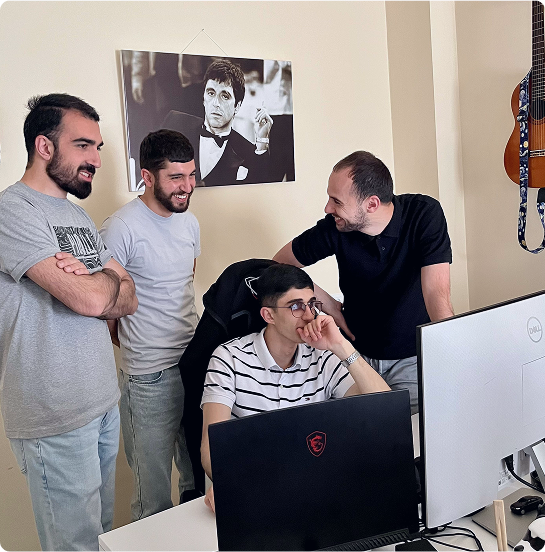

Solicy has partnered with schools, universities, training teams, and EdTech startups to build platforms used by thousands of learners. We understand how to balance educational goals with technical needs to create software that actually works in real-world settings.

Every education platform is different, so we don’t rely on one-size-fits-all solutions. What we build is shaped by your specific goals, whether it’s improving learning outcomes, saving time for your team, or reaching more users.

Education software lives or dies on whether learners and educators actually use it day to day. We design for real classroom and training conditions — spotty wifi, shared devices, short attention spans — not just for a demo.
Key Features That Drive Conversions
Simple rewards, such as badges or unlocking content, help make learning feel a bit more enjoyable and less like a chore.
We track each learner's progress to see what kind of support they need. The platform then guides them to a review, a new challenge, or the next topic based on their performance.
We use clear videos and interactive tasks like drag-and-drop activities or virtual whiteboards to make learning feel more like a real class. It's more engaging than just clicking through slides.
Everyone only sees what they're supposed to. The system protects user data with strong privacy tools in the background.
Learners can save the materials before class and keep studying, even if they lose internet connection.
The platform supports many languages, so you can reach different users easily without doing extra work.

Learning Management Platform

Education Management Platform

Go-To Platform for Family Activities
As an experienced eLearning software development company, Solicy has supported a wide range of education-focused organizations, from early-stage EdTech startups to large institutions and corporate training teams.
EdTech startups need to prove their idea works before running out of runway. We help take a concept to a working MVP quickly, then build out the platform as the user base and funding grow, without locking the product into an architecture that needs a rebuild later.
K-12 schools need software that is simple enough for teachers and students to use day to day, and secure enough to meet strict data protection standards for minors. We build classroom tools, parent communication portals, and learning platforms designed to meet COPPA and FERPA requirements from the start.
Higher education institutions deal with multiple departments, accreditation standards, and large, diverse student bodies. We build LMS platforms, student portals, and credentialing systems designed to handle that scale without becoming difficult for IT teams to maintain over time.
For companies selling courses directly to learners, the platform is the product. We build the infrastructure behind it, including content delivery, payments, progress tracking, and certification, so course creators can focus on course quality instead of managing their tech stack.
L&D teams need to show that training actually happened and actually worked. We build training portals with completion tracking, certification, and reporting built in, so onboarding and compliance training become measurable rather than just assigned.
Education-focused NGOs and public sector teams often operate with tight budgets, multiple stakeholders, and a need to demonstrate impact to funders or oversight bodies. We build accessible, low-maintenance platforms designed to run reliably with limited in-house technical staff.
Our process is rooted in collaboration, transparency, and measurable progress, designed to turn your ideas into fully functional, user-ready education platforms:
We start with conversations and planning sessions to understand your audience, your challenges, and what success looks like. Then, we sketch out the key features and a rough plan to get there, including how your curriculum is structured, what compliance standards apply (FERPA, COPPA, GDPR), and how learners will actually access the platform — in a classroom, on mobile, or both.
Our designers create simple wireframes first, then they build out clickable prototypes. We focus on making everything easy to use, accessible, and smooth across all screen sizes.
We work in short cycles, building your product piece by piece. You'll see updates often, and your input helps guide what comes next.
Before anything goes live, we check how it performs. We test everything, from speed and security to how it looks and works on different devices, including accessibility testing (WCAG compliance) and load testing for cases like exam day, when hundreds of students may log in at once.
After launch, we stay on to support your growth. We'll help with fixes, improvements, and any new features you'd like to add in the future.
Yes. Our solutions are built with advanced security protocols and are fully compliant with standards like FERPA, COPPA, and GDPR to protect sensitive data.
Timelines vary depending on complexity, but most projects take 2–6 months. We provide detailed estimates after the discovery phase.
Projects with advanced features like AI or complex integrations may require additional time for architecture planning and QA.
Yes. We build software that's easy to update or grow over time. You can add new features, change the design, or connect it with other tools without breaking anything.
Our educational app development services are designed to scale easily too, so your mobile learning tools can grow with your needs.
We guide you through the whole process, from early planning and design to development, testing, and support after launch.
Everything is built around your goals and what your users actually need. Our approach keeps things clear and collaborative, so you always know what’s happening and why.
Previous Industry
Next Industry